Trusting a Process We Cannot See
A screening model can be accurate and still send a patient home without an answer. This post asks what a reliability record can justify, using Goldman's reliabilism and a diabetic eye screening program in Thailand, and what the record leaves out.


Post 4 in a series on epistemology and responsible AI in academic health systems
Clinical scene
It is seven in the morning at a small community health clinic in a rural province. Some of the patients have been waiting since six. A diabetes nurse seats a farmer in his sixties in front of a retinal camera, dims what light she can, and photographs the back of each eye.
The clinic is part of a national screening program. An AI system reads the photographs and decides whether the man shows signs of diabetic retinopathy, the eye disease that can take the sight of people with diabetes. In the past, his images would have gone to an eye specialist, and the result would have come back weeks later. Today the answer should take minutes.
The upload is slow. When the answer finally comes, it is not a result. The system has marked his image as ungradable. The nurse takes the photograph again and waits again. The image is rejected a second time. She tells him he will need to see a specialist at a hospital in another district, on another day. He does not know when he can afford to miss another day of work.
Everyone in this scene trusted the system, and they had good reason to. It had an excellent record.
The scene is a composite, but its outline follows published research. In 2016, Gulshan and colleagues reported a deep learning system trained on 128,175 retinal images that panels of ophthalmologists had graded. On two validation sets, it detected referable diabetic retinopathy with an area under the curve of 0.991 and 0.990. At its high sensitivity setting, it found 97.5 and 96.1 percent of cases, with specificity of 93.4 and 93.9 percent (Gulshan et al., 2016). By the measures we usually use, this was a reliable process. Those figures, like most in the field, were calculated on images clear enough to grade. In one validation set, 1,158 of 9,963 images were set aside before the model was scored (Gulshan et al., 2016).
Beede and colleagues, working with Google Health and Rajavithi Hospital in Bangkok, under Thailand's Ministry of Public Health, then studied a deep learning system for the same task as nurses put it to work. Through interviews and observation across eleven clinics in Thailand, they found that "several socio-environmental factors impact model performance, nursing workflows, and the patient experience" (Beede et al., 2020). The model had been trained on high-quality images and was built to reject any image that fell below a quality threshold, which protected its accuracy. In clinics where nurses often worked in poor light, more than a fifth of images were rejected, 393 of 1,838 in the first six months, and patients whose images failed were sent to a specialist at another clinic on another day (Beede et al., 2020; Heaven, 2020). One nurse put the cost in a sentence. "They've been waiting here since 6 a.m., and for the first two hours we could only screen 10 patients" (Heaven, 2020).
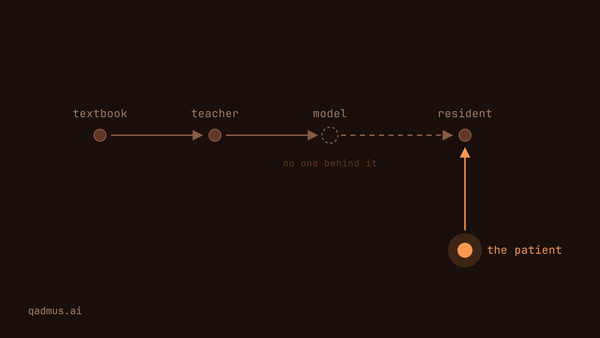
The nurse, the farmer, and the hospital system all trusted a process with an outstanding track record. The epistemological question is whether a track record we cannot see inside can justify a belief we must act on. Reliabilism says it can, under certain conditions. This post examines whether those conditions were met in that room, and what they require of the next system we deploy.
What reliabilism claims
Post 3 ended with a problem. Bayesian reasoning tells us how far to trust a conclusion, given our evidence and our reasoning. With a deep learning model, we can see the conclusion, and we cannot follow the reasoning. Reliabilism offers a way to be justified anyway.
The view begins with the philosopher Alvin Goldman. In 1979 he proposed that "the justificational status of a belief is a function of the reliability of the process or processes that cause it." He defined reliability as "the tendency of a process to produce beliefs that are true rather than false" (Goldman, 1979, p. 10). Some processes earn that trust. Goldman's reliable processes "include standard perceptual processes, remembering, good reasoning, and introspection" (p. 10). Others do not. His list of unreliable ones runs "confused reasoning, wishful thinking, reliance on emotional attachment, mere hunch or guesswork, and hasty generalization" (p. 9).
The striking part of the view is what it leaves out. On Goldman's account, a belief can be justified even when the believer cannot say why it is true and cannot inspect the process that produced it. What matters is whether the process tends to get things right. Philosophers call this an externalist view, because what justifies the belief lies partly outside the believer's own mind.
Medicine already works this way much of the time. A physician trusts a potassium level without watching the analyzer run. A radiologist trusts her own eyes on a film without being able to say how her visual system works. Goldman's point is that this kind of trust can be fully rational.
Juan Durán and Nico Formanek carried the idea into computing. They begin from what the philosopher Paul Humphreys calls essential epistemic opacity. A process is essentially opaque to someone, in Humphreys's words, "if and only if it is impossible, given the nature of X, for X to know all of the epistemically relevant elements of the process" (Humphreys, 2009, as cited in Durán & Formanek, 2018, p. 650). A deep learning model with millions of learned weights is opaque in this sense to every person who uses it. Durán and Formanek answer with what they call computational reliabilism. A belief is justified when it results from a reliable computational process (Durán & Formanek, 2018, p. 654). They name four sources of that reliability, which are verification and validation, robustness analysis, a history of successful and unsuccessful implementations, and expert knowledge (pp. 656 to 657).
Durán and Jongsma then applied the view to medicine. They argue that computational reliabilism, "which does not require transparency and supports the reliability of algorithms, justifies the belief that results of medical AI are to be trusted." They also set a limit that matters for everything that follows. Justified knowledge from reliable indicators is "necessary but not sufficient for normatively justifying physicians to act" (Durán & Jongsma, 2021).
So the core claim, in plain terms, comes in three parts. A belief is justified when it comes from a process that reliably produces truth. The believer does not need to see inside that process. And for machines, reliability is shown by evidence about the process, gathered over time and from more than one angle. One feature of Goldman's definition matters for everything that follows. He measures a process by the beliefs it produces. A process that declines to answer produces no belief, true or false, so its refusals never enter the count.
How reliabilism shows up in AI practice
Much of the machinery of AI governance is reliabilist, though it rarely uses the word.
Regulators work this way. In April 2018, the U.S. Food and Drug Administration authorized IDx-DR, an AI system that screens for diabetic retinopathy in primary care. The agency called it "the first device authorized for marketing that provides a screening decision without the need for a clinician" to read the image as well (U.S. Food and Drug Administration, 2018). The basis for that trust was a pivotal trial of 900 people with diabetes at primary care clinics. The system met every target set in advance, with a sensitivity of 87.2 percent, a specificity of 90.7 percent, and a usable image for 96.1 percent of participants (Abràmoff et al., 2018). The FDA's announcement reported slightly different figures, a sensitivity of 87.4 percent and a specificity of 89.5 percent (U.S. Food and Drug Administration, 2018). That is reliabilism written into regulation. The process was shown to be reliable, and so its output was allowed to stand on its own.
Validation work runs the same way. External validation, prospective trials, and monitoring after launch all ask one question about a model. How often, and under what conditions, does it get things right? Durán and Formanek's four sources of reliability map closely onto that work. The mapping is mine, though it follows their framework. Verification and validation become test sets and clinical trials. Robustness analysis becomes testing across sites, cameras, and patient groups. A history of implementations becomes monitoring data and incident reports. Expert knowledge becomes the clinicians who review cases and the specialists who grade the reference images.
Everyday clinical use works this way too. A radiologist who accepts a flag from a triage tool, or a nurse who acts on a screening result, is trusting a track record. Most could not say what the model saw. Reliabilism says they do not need to, as long as the record is real and fits the case in front of them. That last condition carries most of the weight, and it is where the trouble begins.
Strengths
It fits how medicine already earns trust. Clinicians rely every day on tests, devices, and colleagues they cannot fully check. Reliabilism explains why that reliance can be rational. It holds AI to the same standard we already apply to a lab assay or a blood pressure cuff.
It does not wait for explanations that may never come. If justified trust required full transparency, no one could use deep learning at all, since no one can trace every learned weight. Reliabilism lets a health system act on strong evidence today. It also spares us from pretending that a heat map or a list of features is a true account of what the model did.
It puts evidence at the center, and it keeps trust revisable. The question a reliabilist asks is empirical. How often is the process right, and where? That question has answers, and a governance committee can demand them before a model goes live and keep demanding them after. Because reliabilism ties justification to performance, a process that was reliable last year and has since drifted loses its claim on our trust when the numbers fall.
It can protect patients from human error. In the Thai prospective study discussed below, the deep learning system caught more cases of vision-threatening disease than the retina specialists who over-read the same images, with similar specificity (Ruamviboonsuk et al., 2022). Where the record supports it, reliabilism can justify giving the machine's verdict real weight when it and a specialist disagree, provided the record was earned in that setting.
Weaknesses and blind spots
Reliabilism works only when we know which process we are judging, where it runs, and for whom. Five blind spots matter most for health AI.
Reliable as what? Every belief comes from one particular run of a process, and that run belongs to many kinds of process at once. Earl Conee and Richard Feldman call this the generality problem. In their words, "each token process that causes a particular belief is of numerous different types of widely varying reliability" (Conee & Feldman, 1998, p. 2). They do not discuss medical AI, and applying their problem to this case is my own move. Consider the farmer's photograph. Its reading was one instance of "this model grading retinal images," which did very well in validation. It was also one instance of "this model grading images taken by busy nurses in rooms that could not be darkened, over slow connections." In the field, that narrower process returned no answer for more than one patient in five (Heaven, 2020). Reliabilism says a belief is justified when its process is reliable. It does not say which description of the process to use. A vendor will reach for the broad description, and a patient's outcome may turn on the narrow one.
Reliable where? A reliability record is always indexed to a specific environment. The 2016 validation used images that specialists had graded with care. The Thai clinics were another setting, with other light, other cameras, and other pressures, and there more than a fifth of images were rejected (Heaven, 2020). The model stayed accurate on the images it read. It read fewer of them, and so it served fewer of the people it was meant to serve, a loss no reliability figure records. Reliability is a fact about a process in an environment. Move the process, and the fact may stay behind. Post 2 named this as Hume's problem of induction, and reliabilism inherits it whole.
Reliable for whom? A reliability figure is an average over the people in a study. Abràmoff's pivotal trial reports its participants' age, sex, and ethnicity in detail (Abràmoff et al., 2018), which is good practice. Even so, an overall sensitivity of 87 percent can hide a lower figure for a group too small to move the total. Post 3 showed how chest x-ray models underdiagnosed groups that the averages concealed. A process can be reliable for a population and unreliable for a person.
Reliable, and still not justified for the one who uses it. Laurence BonJour pressed a famous objection. He imagined Norman, a man with a perfectly reliable power of clairvoyance, who one day finds himself believing that the President is in New York City. Norman has no evidence for the belief and no reason to think he has such a power. BonJour argued that Norman is not justified, however reliable his power may be (BonJour, 1980). A nurse in a national program is better placed than Norman. She has reasons to trust the tool, since the ministry chose it and she was trained to use it. Those reasons, though, concern how the process performed somewhere else. Consider the next patient in line, whose image the model does read and pronounces clear. If the nurse has no way to know how the model performs in her clinic, on patients like this one, her belief rests on a record she cannot connect to the case in front of her. The model may be right. From where she sits, her trust is borrowed. This is why the record has to reach the people who use the tool, in a form they can understand and test against what they see.
Reliability does not settle what to do. Durán and Jongsma draw this line themselves. A reliable output can justify belief, but "deliberation about the results of reliable algorithms is required to find out what is a desirable action" (Durán & Jongsma, 2021). The Thai system rejected poor images by design, to protect its accuracy (Heaven, 2020). That choice guards against false reassurance. It also sends a man home without an answer. Reliabilism can tell us that a process is sound. It cannot tell us whether its way of failing is one we should accept.
A model can be reliable on average and still fail the person in front of you.
The health care stress test
The story of the Thai screening program does not end in the waiting room, and its ending is the best case for reliabilism I know.
A team led by Paisan Ruamviboonsuk ran a prospective study of the deep learning system at nine primary care sites in Thailand's national screening program. Between December 2018 and March 2020, 7,651 patients were included in the analysis. For vision-threatening diabetic retinopathy, the system reached a sensitivity of 91.4 percent and a specificity of 95.4 percent. The retina specialists who over-read the same images reached 84.8 and 95.5 percent. The authors concluded that the system "can deliver real-time diabetic retinopathy detection capability similar to retina specialists" in community screening. They added a line that could stand as the moral of this post. "Socioenvironmental factors and workflows must be taken into consideration" when such a system is put to work (Ruamviboonsuk et al., 2022). The study ran in the same country and the same period as the fieldwork that Beede and colleagues describe, with overlapping authors. As I read the two papers together, one measured how reliable the process was in practice and the other showed what that reliability cost the people around it.
So reliabilism holds where the record is gathered in the place of use, and where it counts everyone who came through the door. A process tested in real clinics, with real nurses, real light, and real patients, has earned a kind of trust that a laboratory figure cannot give. That is the strongest reason for prospective, local validation before launch, and for monitoring after.
It strains when the record is borrowed. A vendor's validation from another country, another camera, or another decade is, in the terms of the generality problem, evidence about a different process. A committee that accepts it has quietly chosen the broad description of the process over the narrow one.
It breaks when reliability is measured only on the cases the system agrees to read. Recall Goldman's definition. A process is reliable when it tends to produce true beliefs rather than false ones. A refusal is neither, so it never enters the count. A screening tool that rejects a fifth of images can report excellent accuracy on the other four fifths, and by Goldman's measure it has done nothing wrong. The rejected patients drop out of the numerator and the denominator alike. In a screening program, though, a refusal is an outcome. It sends a person home, delays care, and costs a day of work. A reliability figure is honest only when it also says how many people the process declined to judge, and what became of them. Abràmoff's pivotal trial shows how to do it. It reported that the system produced a usable result for 96.1 percent of participants, alongside its sensitivity and specificity (Abràmoff et al., 2018). Gulshan and colleagues did the same in a secondary analysis, counting ungradable images as referrals, and the model still performed well (Gulshan et al., 2016). The Thai prospective study passes part of this test. Its protocol referred every patient with an ungradable image, though Beede and colleagues saw nurses hesitate to send patients to a distant hospital on that basis alone (Beede et al., 2020). Ruamviboonsuk's headline accuracy figures, however, count only images that both the model and the specialists judged gradable, and the analysis that includes the rest sits in an appendix (Ruamviboonsuk et al., 2022). The model marked about 15 percent of patients as ungradable, and when an expert panel reviewed a sample of those images, it judged only about 62 percent of them truly ungradable.
Before you trust a reliable process, ask where its record was earned, on whom, and what happened to the cases it would not take.
The model that sent the farmer home was a good model. The record that vouched for it was earned somewhere else.
Fit for responsible AI in health care
Fit rating. Strong.
Reliabilism gives health AI its working answer to the black box. It explains why a clinician can be justified in trusting a model she cannot see inside, and it tells a governance committee what to ask for in place of an explanation, which is a record of performance. Its limits are the limits of that record. A record belongs to a process in a place, measured on certain people, counting only the cases the process agreed to judge. Reliabilism will justify trust exactly as far as the record reaches, and no further, provided someone asks how far that is.
In health care, trust is given to people before it is given to tools. When a family hears that a computer has read a scan, they want to know whether the clinicians standing before them understand the result and will answer for it. Reliabilism is right that a good record can justify belief. I also believe that patients deserve to know the record was kept for people like them, in places like theirs, and that someone will answer for it when it fails. That obligation falls in the first place on the health system that deploys the model, not on the patient or the bedside clinician alone.
Next, rationalism and formal verification
Reliabilism judges a process by its results. It never asks whether the process could have been proven correct before it ran. For some kinds of software, that proof is possible.
In his Meditations of 1641, René Descartes sought knowledge that reason alone could make certain. Three centuries later, Tony Hoare set out axioms and rules of inference "which can be used in proofs of the properties of computer programs," borrowing methods first used in geometry (Hoare, 1969). Post 5 asks what such proofs can offer health AI, and why code that is proven correct can still harm a patient once it meets the body.
Governance question
Where was this model's record of reliability earned, on which patients, and how many cases did it decline to judge?
References
Abràmoff, M. D., Lavin, P. T., Birch, M., Shah, N., & Folk, J. C. (2018). Pivotal trial of an autonomous AI-based diagnostic system for detection of diabetic retinopathy in primary care offices. npj Digital Medicine, 1, 39. https://doi.org/10.1038/s41746-018-0040-6
Beede, E., Baylor, E., Hersch, F., Iurchenko, A., Wilcox, L., Ruamviboonsuk, P., & Vardoulakis, L. (2020). A human-centered evaluation of a deep learning system deployed in clinics for the detection of diabetic retinopathy. In Proceedings of the 2020 CHI Conference on Human Factors in Computing Systems (pp. 1–12). ACM. https://doi.org/10.1145/3313831.3376718
BonJour, L. (1980). Externalist theories of empirical knowledge. Midwest Studies in Philosophy, 5, 53–73. https://doi.org/10.1111/j.1475-4975.1980.tb00396.x
Conee, E., & Feldman, R. (1998). The generality problem for reliabilism. Philosophical Studies, 89(1), 1–29. https://doi.org/10.1023/A:1004243308503
Durán, J. M., & Formanek, N. (2018). Grounds for trust: Essential epistemic opacity and computational reliabilism. Minds and Machines, 28(4), 645–666. https://doi.org/10.1007/s11023-018-9481-6
Durán, J. M., & Jongsma, K. R. (2021). Who is afraid of black box algorithms? On the epistemological and ethical basis of trust in medical AI. Journal of Medical Ethics, 47(5), 329–335. https://doi.org/10.1136/medethics-2020-106820
Goldman, A. I. (1979). What is justified belief? In G. S. Pappas (Ed.), Justification and knowledge (pp. 1–23). D. Reidel. https://doi.org/10.1007/978-94-009-9493-5_1
Gulshan, V., Peng, L., Coram, M., Stumpe, M. C., Wu, D., Narayanaswamy, A., Venugopalan, S., Widner, K., Madams, T., Cuadros, J., Kim, R., Raman, R., Nelson, P. C., Mega, J. L., & Webster, D. R. (2016). Development and validation of a deep learning algorithm for detection of diabetic retinopathy in retinal fundus photographs. JAMA, 316(22), 2402–2410. https://doi.org/10.1001/jama.2016.17216
Heaven, W. D. (2020, April 27). Google's medical AI was super accurate in a lab. Real life was a different story. MIT Technology Review. https://www.technologyreview.com/2020/04/27/1000658/google-medical-ai-accurate-lab-real-life-clinic-covid-diabetes-retina-disease/
Hoare, C. A. R. (1969). An axiomatic basis for computer programming. Communications of the ACM, 12(10), 576–580. https://doi.org/10.1145/363235.363259
Ruamviboonsuk, P., Tiwari, R., Sayres, R., Nganthavee, V., Hemarat, K., Kongprayoon, A., Raman, R., Levinstein, B., Liu, Y., Schaekermann, M., Lee, R., Virmani, S., Widner, K., Chambers, J., Hersch, F., Peng, L., & Webster, D. R. (2022). Real-time diabetic retinopathy screening by deep learning in a multisite national screening programme: A prospective interventional cohort study. The Lancet Digital Health, 4(4), e235–e244. https://doi.org/10.1016/S2589-7500(22)00017-6
U.S. Food and Drug Administration. (2018, April 11). FDA permits marketing of artificial intelligence-based device to detect certain diabetes-related eye problems [Press release]. PR Newswire. https://www.prnewswire.com/news-releases/fda-permits-marketing-of-artificial-intelligence-based-device-to-detect-certain-diabetes-related-eye-problems-300628218.html